
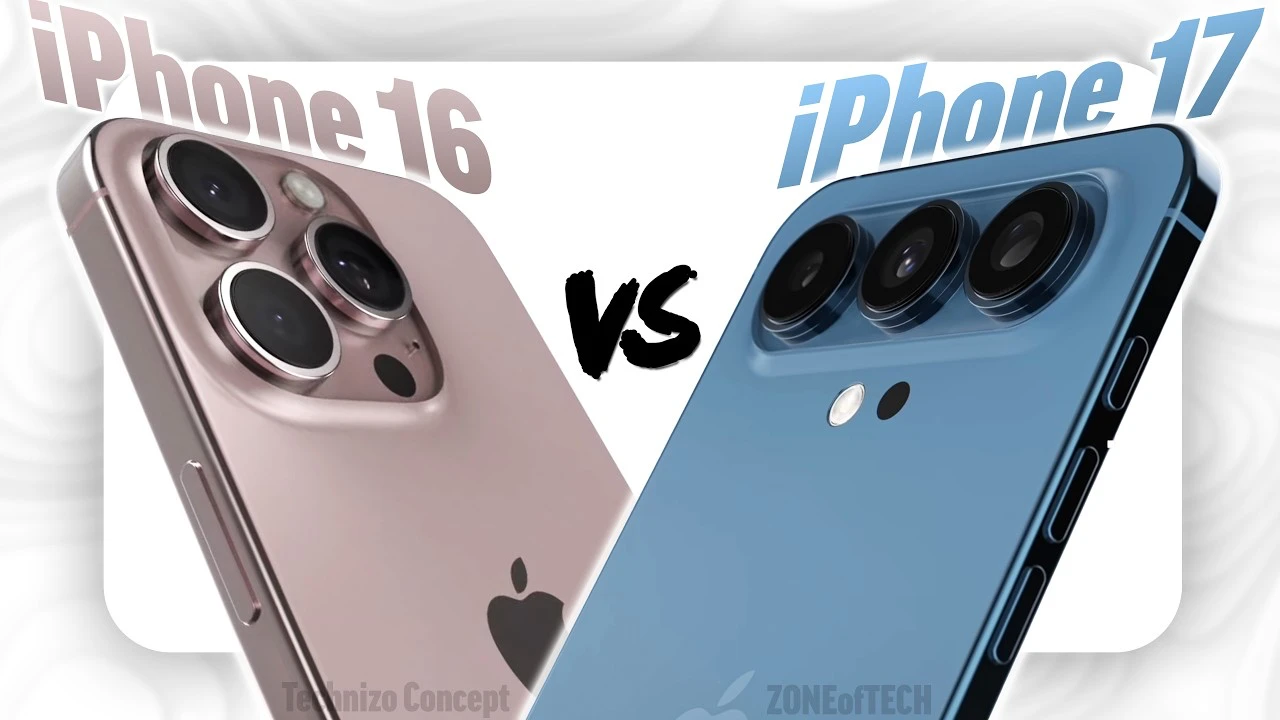

The battle between the iPhone 16 series vs iPhone 17 series is heating up well before the official launch. You might be holding an older iPhone and wondering if you should upgrade now or wait. Apple continues to push the boundaries of smartphone technology with every single release. The iPhone 16 lineup brought us the A18 chip and Camera Control button. However, rumors suggest the iPhone 17 series will redefine the entire lineup with a new “Air” model. This guide breaks down every single detail to help you decide. We will analyze the camera, battery, processor, and display specifications for every model. Let’s dive deep into this comparison to find your perfect match.
The Major Shift in Design Philosophy Of iPhone 16 series vs iPhone 17 series
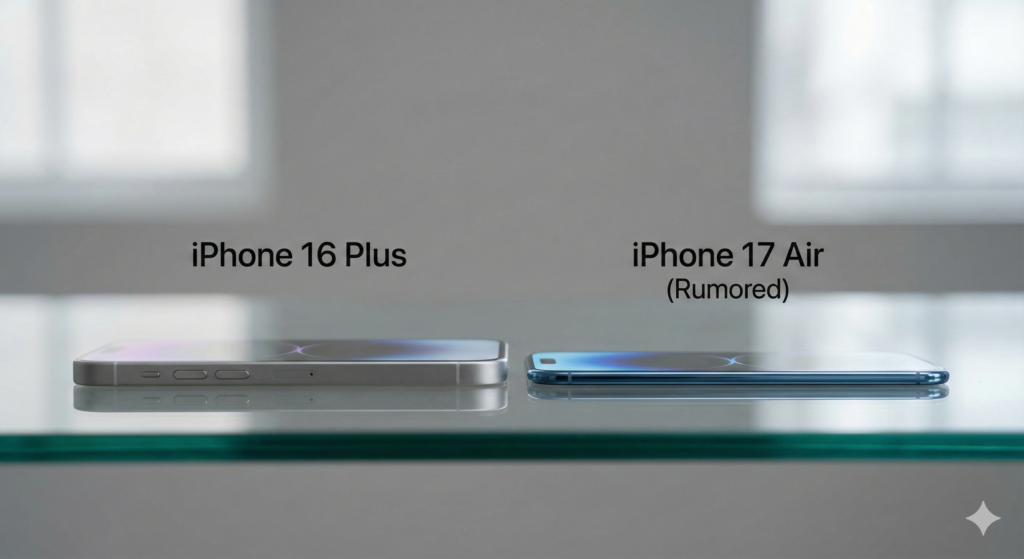
Apple is planning a massive design overhaul for the upcoming iPhone 17 lineup. The iPhone 16 series stuck to a familiar, robust industrial design that we know well. It features aerospace-grade aluminum and color-infused glass that feels premium in the hand. The 16 Pro models saw a slight increase in screen size to 6.3 and 6.9 inches. In contrast, the iPhone 17 series introduces a completely new form factor called the “iPhone 17 Air.” This model will reportedly replace the “Plus” model and focus entirely on thinness. It aims to be the sleekest iPhone ever created, sacrificing some battery for style. The Pro models in the 17 series will likely refine the titanium build further.
The Rise of the iPhone 17 “Air”
The most exciting rumor is the death of the “Plus” and the birth of the “Air.” The iPhone 16 Plus is a powerhouse with a massive battery and screen. However, it is structurally similar to the base iPhone 16. The iPhone 17 Air takes a radical departure with a rumored thickness of just 5-6mm. This would make it significantly thinner than the 7.8mm iPhone 16 Plus. It targets users who want a large screen without the heavy brick-like feel. This shift signals Apple’s desire to make phones fashionable again, not just functional.
Display Technology: The End of 60Hz
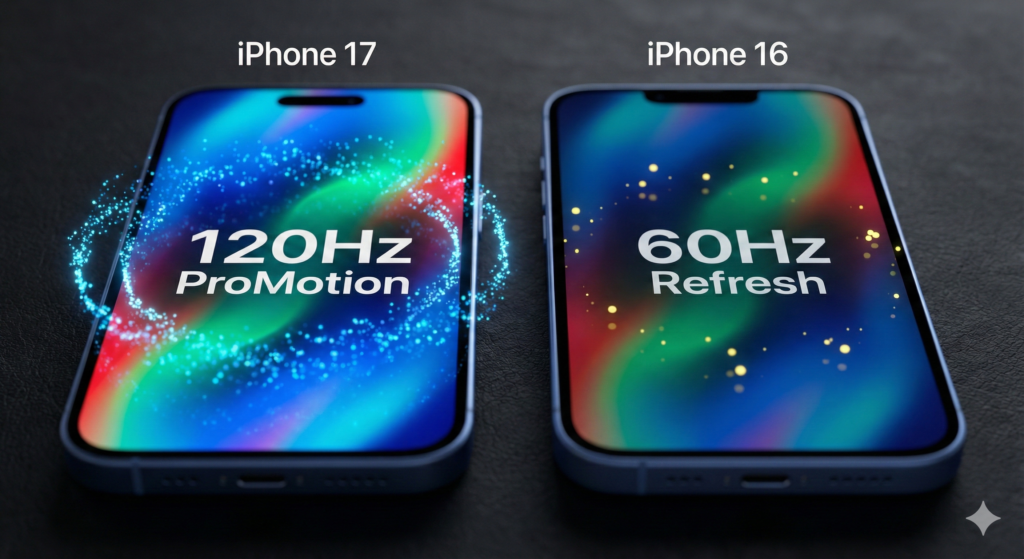
The biggest differentiator in the iPhone 16 series vs iPhone 17 series battle is the screen refresh rate. For years, the standard iPhone models have been stuck with 60Hz displays. The iPhone 16 and 16 Plus unfortunately continue this trend, lacking ProMotion technology. This makes scrolling feel less fluid compared to the Pro models. The iPhone 17 series is rumored to finally bring 120Hz ProMotion to all models. This means the standard iPhone 17 and iPhone 17 Air will feel incredibly smooth. Gamers and social media scrollers will notice this upgrade immediately.
Understanding ProMotion and LTPO
ProMotion is not just about smoothness; it is also about battery efficiency. The iPhone 16 Pro uses LTPO technology to drop the refresh rate down to 1Hz. The standard iPhone 16 cannot do this, which drains more power on static screens. The iPhone 17 bringing this to the base model is a massive value shift. It allows for an “Always-On Display” without killing your battery life. This feature alone might be worth waiting for if you buy base models. The visual fidelity of the iPhone 17 series will be a generational leap.
Processor Specifications: A18 vs A19
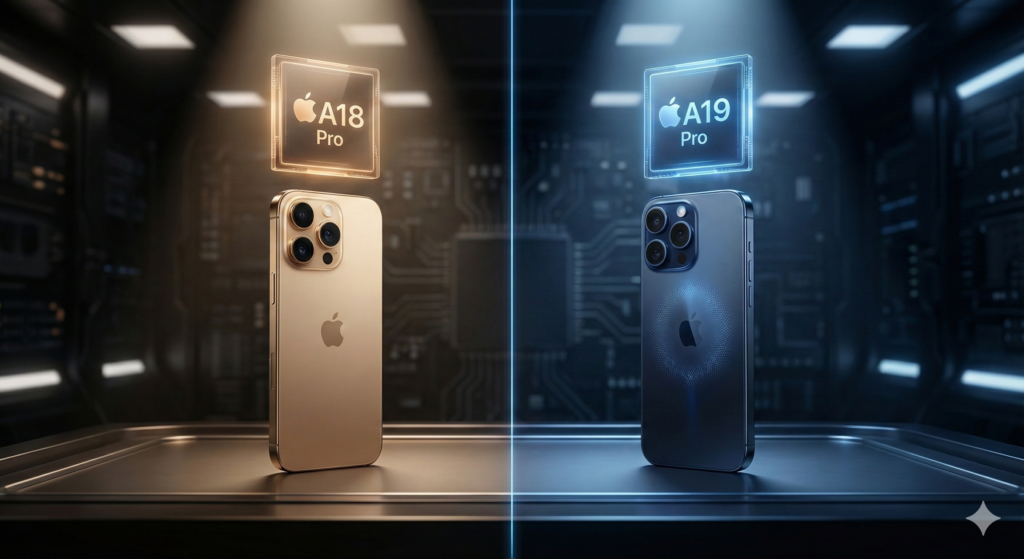
Performance is the heart of any iPhone, and the chipsets tell the story. The iPhone 16 series introduced the A18 and A18 Pro chips built on 3nm technology. These processors are incredibly fast and handle Apple Intelligence tasks with ease. However, the iPhone 17 series will debut the A19 and A19 Pro chips. These next-gen chips are expected to use TSMC’s more advanced N3P process. This process allows for higher transistor density and better energy efficiency.
A18 Pro Deep Dive
The A18 Pro inside the iPhone 16 Pro is a beast of a processor. It features a 6-core CPU with two performance cores and four efficiency cores. It also houses a 6-core GPU that supports hardware-accelerated ray tracing for gaming. The Neural Engine is twice as fast for machine learning tasks. This allows features like Visual Intelligence to work instantly. It is currently the fastest chip in any smartphone on the market today.
A19 Pro Expectations
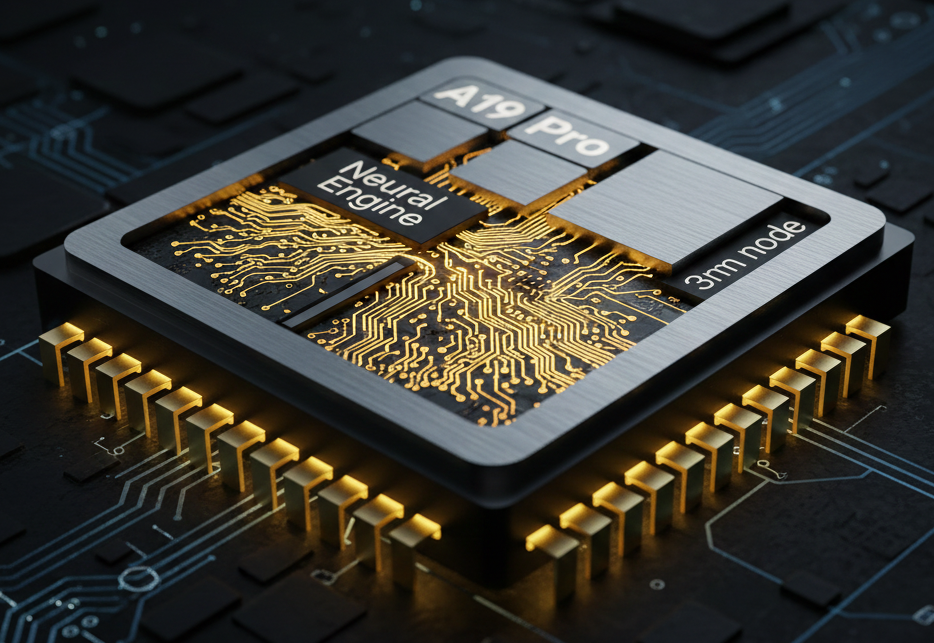
The A19 Pro aims to push the boundaries of mobile computing even further. Early benchmarks suggest a significant jump in multi-core performance scores. We expect the A19 Pro to feature improved thermal management to sustain peak speeds. This is crucial for playing AAA games like “Resident Evil” or “Assassin’s Creed.” The Neural Engine will likely see another core count increase for advanced AI. This chip will future-proof your device for at least five to six years.
Camera Specifications: The Megapixel War
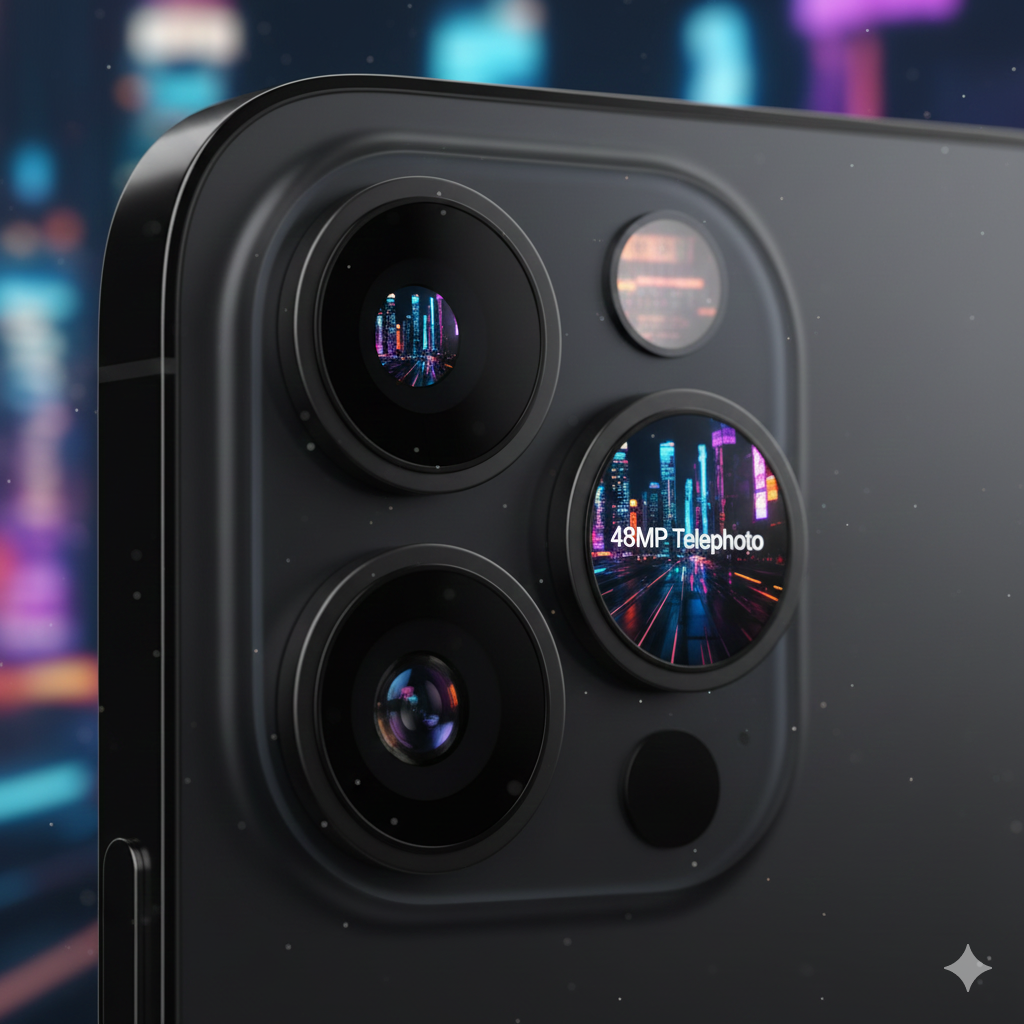
Photography enthusiasts analyze the iPhone 16 series vs iPhone 17 series camera specs closely. The iPhone 16 Pro brought a 48MP Ultra Wide camera to the table. This allows for incredible macro shots and high-resolution landscape photography. The base iPhone 16 retained a 12MP Ultra Wide lens, which is decent but aging. The iPhone 17 series is rumored to equip all rear cameras with 48MP sensors. This includes the telephoto lens on the Pro Max model.
The Front Camera Revolution

Selfies are about to get a massive clarity upgrade on the new models. The iPhone 16 series uses a reliable 12MP front-facing TrueDepth camera. It takes great photos, but the resolution has been static for years. The iPhone 17 series is expected to feature a new 24MP front camera. This doubles the resolution, allowing for much sharper crops and detailed video calls. It will also feature a six-element lens for better light capture.
Zoom Capabilities
The iPhone 16 Pro Max currently features a 5x tetraprism optical zoom lens. This allows you to capture distant subjects with zero loss in quality. The standard iPhone 16 relies on a 2x “optical-quality” crop from the main sensor. The iPhone 17 Pro Max may increase this optical zoom range further. Rumors hint at a potential variable zoom or a higher megapixel count for the zoom lens. This would make the 17 Pro Max the ultimate concert photography tool.
Battery Life and Charging Speeds
Battery anxiety is real, and Apple is working hard to eliminate it. The iPhone 16 Plus currently holds the crown for impressive battery endurance. It can easily last two days with moderate usage thanks to its efficiency. The iPhone 16 Pro Max also features a larger battery than its predecessor. However, the iPhone 17 “Air” presents a complicated battery situation. Because the device is so thin, the physical battery must be smaller.
Charging Innovation
Fast charging is an area where iPhone has lagged behind some Android competitors. The iPhone 16 series supports up to 25W MagSafe charging with a 30W adapter. Wired charging speeds are decent, reaching 50% in about 30 minutes. The iPhone 17 series is rumored to support even faster wired charging speeds. We might finally see 40W or 45W wired charging capabilities. This would significantly reduce the time your phone spends tethered to a wall.
Detailed Model-by-Model Comparison
To truly understand the iPhone 16 series vs iPhone 17 series, we must compare specific models.
iPhone 16 vs iPhone 17 (Base Models)
The standard iPhone 16 is a fantastic phone, but the iPhone 17 is a huge leap.
- Display: iPhone 16 has 60Hz; iPhone 17 gets 120Hz ProMotion.
- Camera: iPhone 16 has 12MP Ultra Wide; iPhone 17 gets 48MP Ultra Wide.
- Front Cam: iPhone 16 has 12MP; iPhone 17 gets 24MP.
- Chip: A18 vs A19.
- Verdict: The iPhone 17 is the biggest upgrade for the base model in years.
iPhone 16 Plus vs iPhone 17 Air
This is the most drastic comparison in the entire lineup.
- Design: The 16 Plus is a standard slab; the 17 Air is ultra-slim (approx 5mm).
- Screen Size: Both are around 6.6-6.7 inches, but the Air might have slimmer bezels.
- Battery: The 16 Plus will likely have better battery life than the Air.
- Camera: The Air might only have a single powerful rear camera to save space.
- Verdict: Choose the 16 Plus for battery; choose the Air for style.
iPhone 16 Pro vs iPhone 17 Pro
The Pro models follow a more iterative but significant upgrade path.
- RAM: iPhone 16 Pro has 8GB; iPhone 17 Pro is rumored to jump to 12GB.
- AI: The 12GB RAM in the 17 Pro allows for complex on-device AI.
- Connectivity: iPhone 17 Pro will feature an Apple-designed Wi-Fi 7 chip.
- Face ID: iPhone 17 Pro might feature under-display Face ID technology.
- Verdict: Power users who need maximum RAM should wait for the 17 Pro.
Software: iOS 18 vs iOS 19 (iPhone 16 series & iPhone 17 series)
The hardware is only as good as the software it runs. The iPhone 16 launched with iOS 18, focusing heavily on customization. Users can now place icons anywhere and tint them to match wallpapers. Apple Intelligence is deeply integrated into iOS 18 for writing tools and Siri. The iPhone 17 will launch with iOS 19, which remains a mystery.
AI Integration
iOS 19 is expected to bring “Generative AI” to a new level. The A19 chip’s improved NPU will drive these exclusive features. We expect smarter Siri interactions that can control third-party apps effortlessly. The iPhone 16 will get some of these features, but not all. The extra RAM in the iPhone 17 Pro is key here. It allows the Large Language Models (LLMs) to run locally on the device.
Gaming Performance Of iPhone 16 series vs iPhone 17 series
Mobile gaming is becoming indistinguishable from console gaming on high-end iPhones. The iPhone 16 series supports hardware-accelerated ray tracing for realistic lighting. Games like “Death Stranding” run surprisingly well on the A18 Pro chip. However, the iPhone 17 series will take this to the next level. The 120Hz screen on the base iPhone 17 makes gaming accessible to everyone.
Thermal Management
Heat is the enemy of performance, and Apple is fixing it. The iPhone 16 series uses a graphene thermal sheet to dissipate heat. This works well for short bursts of high-intensity tasks or gaming. Rumors indicate the iPhone 17 Pro will use a vapor chamber cooling system. This is a superior method found in high-end gaming phones. It allows for sustained performance without dimming the screen or dropping frames.
Connectivity and Future Proofing
When you buy an iPhone, you want it to last for years. The iPhone 16 series vs iPhone 17 series comparison shows differences in connectivity. The iPhone 16 supports Wi-Fi 7, which is incredibly fast and low latency. It also features the second-generation Ultra Wideband chip for Precision Finding. The iPhone 17 is expected to debut Apple’s own in-house Wi-Fi chip.
The Modem Debate Of iPhone 16 series vs iPhone 17 series
The iPhone 16 uses a Qualcomm Snapdragon X75 modem for 5G connectivity. It is efficient, fast, and reliable on networks around the world. The iPhone 17 series might be the first to use an Apple-designed 5G modem. This would give Apple complete control over the connection stack and battery usage. However, first-generation modems can sometimes have teething issues compared to Qualcomm’s mature tech.
Price vs Value Analysis Of iPhone 16 series vs iPhone 17 series
Pricing strategy is always a critical factor for any buyer. The iPhone 16 series launched at the standard price points ($799, $899, $999, $1199). We expect the standard iPhone 17 to maintain the $799 price point. However, the iPhone 17 Air might be priced higher than the Plus model. Rumors suggest it could sit between the Pro and Pro Max in price.
Is the Wait Worth It?
If you have an iPhone 14 or 15, the 16 is a modest update. But if you are on an iPhone 12 or 13, it is huge. However, the iPhone 17 brings fundamental changes like ProMotion to the base model. If you can hold out for another year, the value proposition is better. The base iPhone 17 will essentially be an “iPhone 16 Pro” without the telephoto lens. That is a compelling deal for the $799 price tag.
Conclusion
The battle of the iPhone 16 series vs iPhone 17 series comes down to your needs. The iPhone 16 is a refined, powerful, and safe choice available today. It offers great cameras, solid battery life, and the new Camera Control button. It is perfect if you need a new phone right now.
However, the iPhone 17 series represents a generational shift in strategy and technology. The introduction of the “Air” model, 120Hz screens for everyone, and 24MP selfies are massive. If you prioritize design and display smoothness, the iPhone 17 is worth the wait. The gap between the standard and Pro models is finally shrinking. Ultimately, both series are triumphs of engineering, but the 17 looks to be the future.